2026-10-23 · 3 min read
How to Build a Sleep Schedule for Rotating Shifts (Step-by-Step)
A sleep schedule for shift work has to flex with the roster, not fight it. Here is the concrete sequence: map your light, set your window, time…
By AeternusVita
We make the products recommended here.
A sleep schedule for shift work has to flex with the roster, not fight it. Here is the concrete sequence: map your light, set your window by rotation type, time meals and caffeine around your actual shift, and protect the transition days that usually undo everything.
Step 1: Map your light exposure to your shift times
Start with a light map keyed to when your shift actually starts and ends, not to the clock. Coming off a night shift, bright light delays the body clock further in the wrong direction — blocking light on the way home and getting it at the right point in your wake window does more than any bedtime rule. Ten minutes spent mapping this before your next shift is the single highest-leverage step.
Step 2: Set your sleep window by rotation type, not by the clock
Fixed nights, forward rotation and backward rotation each need a different sleep-window rule. Work out a chronotype and shift-pattern self-assessment first, then apply the sleep-window logic that matches your actual rotation — not a generic "sleep at the same time every day" rule that assumes a pattern you do not have.
Step 3: Time meals and caffeine to the shift, not the sun
Eating on an inverted schedule can disrupt digestion and energy regardless of what you eat, so timing the meals matters as much as the content. Pair this with a caffeine-cutoff calculator built around your shift start, and a nap cheat sheet that times naps by function rather than "nap when you can."

Step 4: Protect your transition days and days off
The day you rotate onto or off nights is where most schedules fall apart, and so is the first day off, when sleeping in can re-flip a clock that took the whole week to adjust. Use a transition-day protocol on rotation days and a days-off recovery protocol that avoids restarting the adjustment every week off.
How this book helps
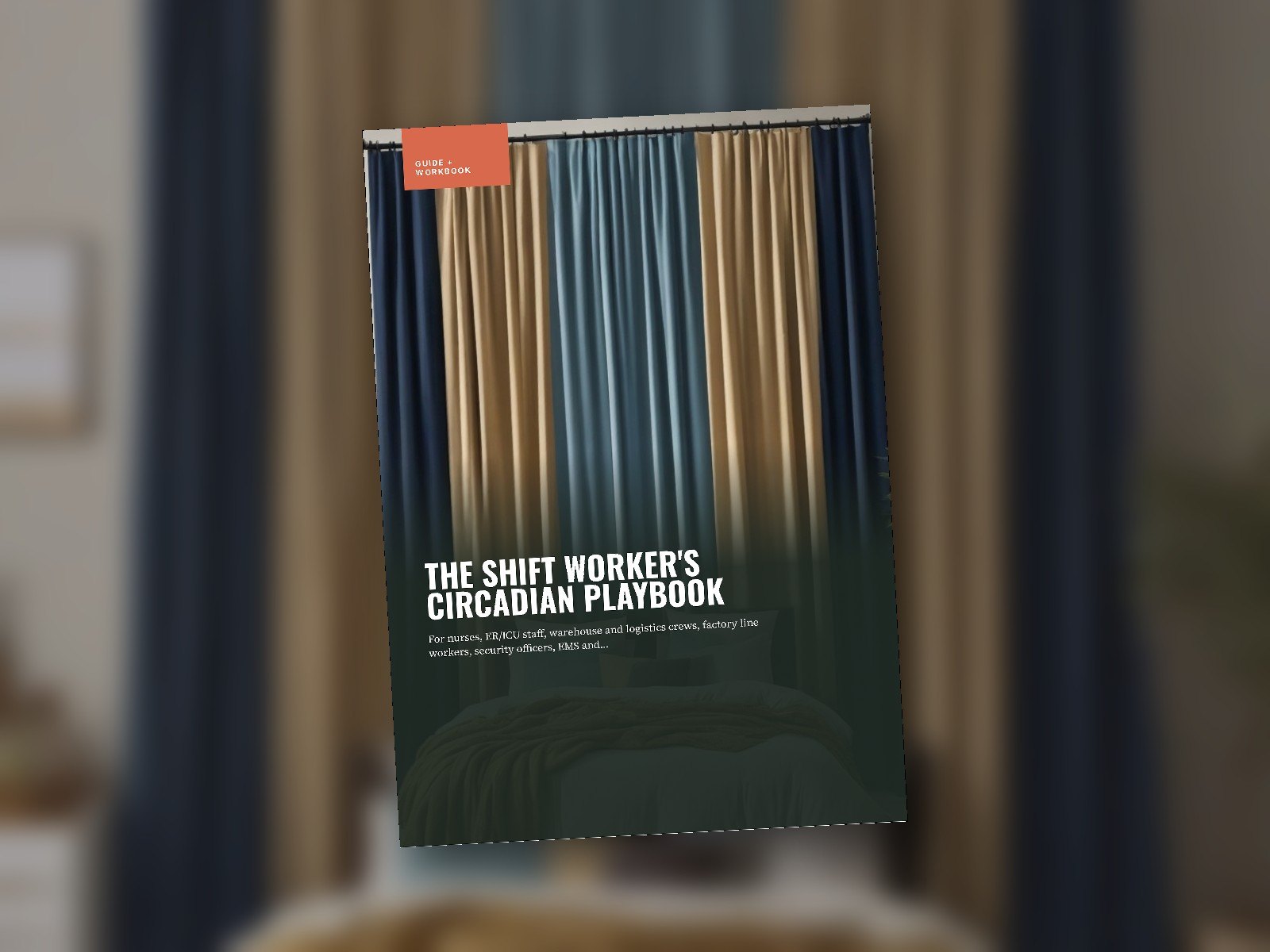
The Shift Worker's Circadian Playbook walks this exact sequence: the 10-minute Shift Pattern Light Map, per-pattern sleep-window and caffeine-cutoff calculators, meal-timing templates, the nap cheat sheet, and the transition-day and days-off checklists, backed by a 21-day tracker. Guide plus workbook, £15, in the books collection.
This is an educational scheduling and light-timing resource, not medical, psychiatric or occupational-health advice. If you have a diagnosed sleep disorder, work an FAA- or DOT-regulated role, are pregnant, or manage a chronic health condition, talk to a physician or occupational-health provider before changing your routine.
This week
Map the light before your next shift, pick the sleep-window rule for your rotation type, and write down your meal and caffeine cutoffs. The schedule only has to survive one full rotation to prove it works.
Related articles
2026-10-24 · 3 min read
Should Shift Workers Buy a Circadian Playbook? An Honest Answer
Generic sleep advice does not survive contact with a rotating roster. A circadian playbook promises to fix that by starting from your actual shift…
Read article →2026-10-22 · 3 min read
Why Normal Sleep Advice Fails Shift Workers
Sleep hygiene tips assume a daytime job and a dark night. Here is why that advice collapses on rotating or night shifts, and what actually has to…
Read article →2027-02-26 · 3 min read
How to Use a 14-Day Sleep Tracker to Fix Toddler Night Wakings
Night wakings blur together in an exhausted parent's memory. Was it two wakings or five? Did the early bedtime help or hurt? Without a record, you…
Read article →