
2026-12-15 · 4 min read
How a Daily Tracker Surfaces Stress Patterns You Can't Feel
You don't notice your stress rising. Nobody does — that is the whole problem. Stress creeps up one bad night of sleep, one extra drink, one short fuse…
By AeternusVita
We make the products recommended here.
You don't notice your stress rising. Nobody does — that is the whole problem. Stress creeps up one bad night of sleep, one extra drink, one short fuse at a time, until something breaks: a blowup at home, a health scare, a week where you can't remember feeling okay. A daily tracker catches the creep while it is still small. Here is how the mechanism works and why men in particular benefit from it.
Your brain normalizes everything, including burnout
Humans adapt to gradual change. The same psychology that lets you stop smelling your own house lets you stop noticing that your resting tension has been climbing for months. Yesterday felt like today, so everything seems fine — until you compare today to three months ago and realize nothing has felt fine in weeks. Memory smooths the curve. Written data doesn't.
A daily log of even three inputs — sleep hours, stress level, drinks — creates an outside memory. When the numbers trend the wrong way for two weeks, you see it on paper before you feel it in your body. That early warning is the entire value proposition. Everything else is commentary.
Sleep, alcohol, and temper form a loop
These three feed each other in a predictable cycle. Bad sleep lowers impulse control. Lower impulse control means a shorter fuse and easier drinking. Drinking wrecks sleep quality. Repeat. Most men try to fix one corner of the triangle — usually temper, because that is the one other people complain about — without seeing the loop.
Tracking all three side by side reveals which corner is actually driving. For some men, fixing bedtime fixes the temper without a single anger-management exercise. For others, the log shows alcohol is the lever and everything else follows. You can't know which lever is yours until you watch them move together for a few weeks. Guessing wastes months; logging answers it in one.
The weekly review is where data becomes decisions
Daily entries without review are just a diary of numbers. The transformation happens in a weekly review: ten minutes, same questions each week. What spiked? What helped? What is one thing I will change this week? That third question is the engine — one change, not five, because five changes all fail and one change compounds.
Over a couple of months, those single weekly changes stack: an earlier bedtime here, a drinking rule there, a walk after the meeting that always ruins your mood. Nobody overhauled their life. The log just kept pointing at the next smallest fix until the pattern moved. Patterns can surface fast once you start looking — which is why the review matters more than any single daily entry.
Why paper-style structure beats an app for this
Apps nag, gamify, sell your data, and die in a forgotten folder after update fatigue. A printable PDF tracker has no notifications, no streak animations, no account. It sits on your desk and asks one thing: five honest minutes. Men who distrust the self-help industry tend to trust a piece of paper more than an app with a subscription — correctly, since the paper has no incentive to keep you anxious and engaged. Boring tools get used. Exciting tools get uninstalled.
How this book helps
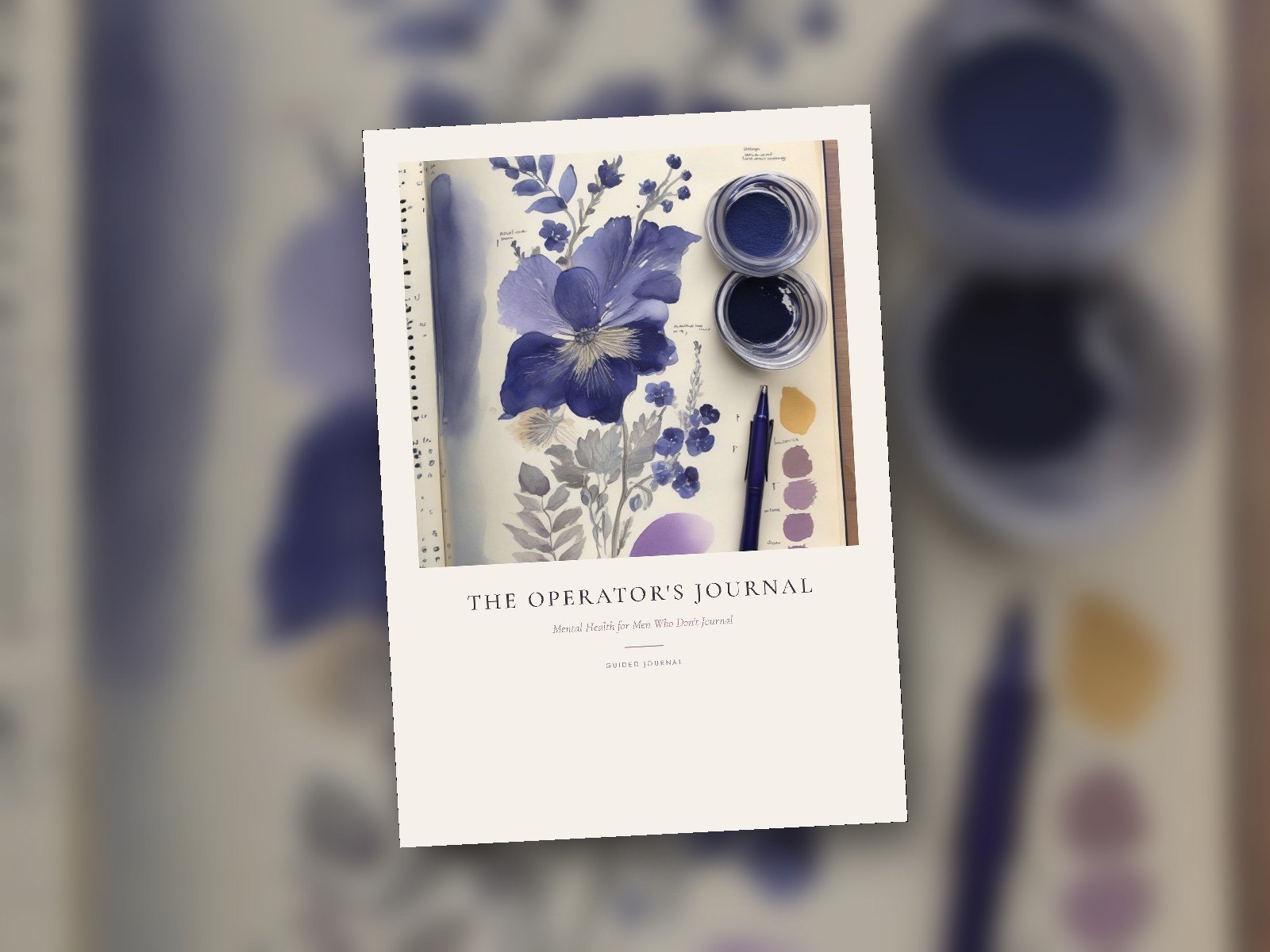
The Operator's Journal packages this whole system: 60 daily entries with action-and-ownership prompts, a stress/sleep/alcohol tracker, an anger pattern map, and weekly reviews, plus a crisis-resource page. It states clearly that it is educational content, not therapy — the fence that makes everything inside it trustworthy.
If tracking reveals that alcohol is your loop's driver, run the numbers with the Sober October 31-day companion. If the log shows your problem is follow-through rather than insight, Habit Stacking Mastery turns the weekly review's "one change" into an automatic routine.
You can't manage what you don't measure. Start measuring.
Related articles
2026-12-16 · 4 min read
How to Use an Anger Map and Weekly Review (5 Minutes a Day)
An anger map sounds clinical. It isn't. It is a simple record of when your temper spiked, what set it off, and how long it took to cool down — kept for…
Read article →2026-12-14 · 4 min read
Should Men Who Hate Journaling Buy a Journal?
If the words "dear diary" make your skin crawl, you are exactly who this post is for. Most journals are built for people who already love writing about…
Read article →2027-02-20 · 4 min read
How to Use a 30-Day Log to Decode Your Rescue Dog's Stress Signals
Most adopters try to remember how their dog behaved — and misremember. Was the barking worse this week or last? Does he always freeze at that corner,…
Read article →