
2026-12-21 · 4 min read
What Is Habit Stacking and Why Does It Work?
Habit stacking is the practice of linking a new behavior to an existing automatic one: "After I pour my morning coffee, I will write down my top three…
By AeternusVita
We make the products recommended here.
Habit stacking is the practice of linking a new behavior to an existing automatic one: "After I pour my morning coffee, I will write down my top three priorities." The old habit is the cue, the new habit is the payload. It sounds too simple to matter — and that simplicity is exactly why behavioral science keeps validating it while elaborate productivity systems keep failing. Here's the full explainer.
The science in plain language
Your brain loves automaticity. Behaviors repeated in stable contexts get chunked into routines that run with minimal conscious effort — that's why you can drive a familiar route while thinking about something else. Psychologists call the trigger-behavior link a "cue," and decades of implementation-intention research show that specifying when and where you'll act dramatically raises follow-through compared to mere goal intentions.
Habit stacking hijacks this machinery deliberately. Instead of building a cue from scratch (hard — new reminders get ignored within days), you borrow a cue that's already automatic and fires daily. The coffee maker, the lunch break, brushing your teeth: these are cues with years of reinforcement behind them. Piggybacking a new behavior onto one gives the new habit a free, reliable trigger from day one. You're not building a road; you're adding a lane to a highway.
Why it beats reminders, apps, and motivation
Phone reminders fail because they fire regardless of context — buzzing during a meeting teaches you to dismiss them, and within a week they're invisible. Apps fail because they add friction: open app, log thing, maintain streak, update app. Motivation fails because it's weather. Anchors succeed because they fire in the right context at the right moment with zero technology and zero decisions.
Consider flossing. "Floss more" plus phone reminders: dead in a week. "After I brush my teeth at night, I will floss one tooth": bizarre survival rate, because the anchor (brushing) happens in the bathroom, toothbrush in hand, every night. Location, tools, and timing all align. One tooth sounds like a joke until you realize everyone who flosses one tooth finishes the job — starting was the only barrier, and the anchor demolished it.
The five parts of a working stack
A complete habit-stacking practice has five parts. First, audit: list your current automatic behaviors honestly — the real day, not the ideal one. Second, anchor matching: pair each desired new habit with an existing behavior similar in context (bathroom habits pair with bathroom anchors; desk habits with desk anchors). Third, start small: shrink the new habit until it feels almost too easy, because easy survives bad days.
Fourth, chaining: once one stacked habit stabilizes, use it as the anchor for the next — coffee → priorities → vitamins → five-minute tidy — growing a morning routine link by link instead of installing one overnight. Fifth, troubleshooting: when a link breaks, debug the design (wrong anchor? too big? context changed?) rather than blaming yourself. Each part is simple; together they form a routine-building engine that runs without willpower.
What habit stacking can't do (honest limits)
Habit stacking organizes behavior; it doesn't create desire or treat dysfunction. It won't make you want a goal you don't actually want — stacked actions toward someone else's dream still feel hollow. It isn't a substitute for professional support with clinical habit or behavior concerns; a framework is educational content, not treatment. And it can't fix an environment actively working against you: if your evenings are chaos, no anchor survives them, and the environment needs attention first.
The method also fails when people stack too fast — five new habits on Monday, all dead by Friday. One link at a time, stabilized before adding the next. Patience is the price; automaticity is the product. Anyone promising faster is selling something.
How this book helps
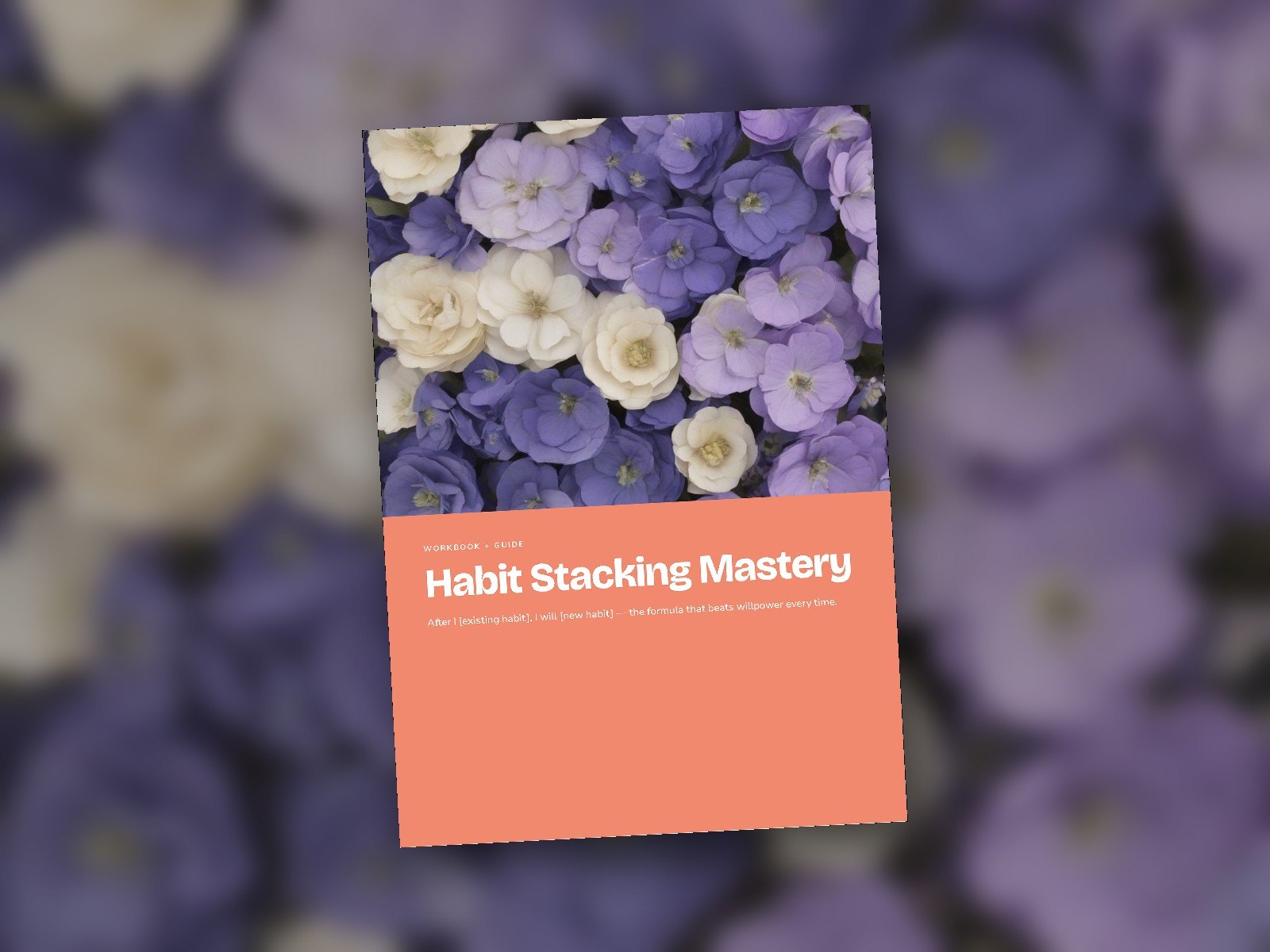
Habit Stacking Mastery walks through all five parts in full: the habit audit, anchor matching, starting small, chaining, and troubleshooting — grounded in behavioral-science research, with a companion workbook to build your stacks on paper. The formula that works without relying on willpower.
Apply it to fitness logging with the Student Athlete Recovery Tracker, or to mental-health tracking with The Operator's Journal — both are anchor-friendly daily systems that slot neatly into a morning or evening stack.
One anchor. One tiny habit. Start today.
Related articles
2026-12-22 · 4 min read
How to Build Your First Habit Stack in 20 Minutes
Enough theory. Here is the exact 20-minute exercise for building your first habit stack — one anchor, one new habit, designed to survive contact with…
Read article →2026-12-20 · 4 min read
Why Do My New Habits Always Fail After Two Weeks?
You start strong. Gym four times in week one, reading every night, the new morning routine firing on all cylinders. By week three it's gone — not with…
Read article →