2027-02-07 · 3 min read
How Seasonal Tracking Improves Hive Health Year After Year
Ask experienced beekeepers their most painful lesson and a striking number will name the same thing: timing. The treatment applied three weeks late.…
By AeternusVita
We make the products recommended here.
Ask experienced beekeepers their most painful lesson and a striking number will name the same thing: timing. The treatment applied three weeks late. The super added after the flow. The swarm check skipped the exact week it mattered. Seasonal tracking — recording what you did, when, and what happened next — is how beekeepers convert one year's pain into next year's timing. Here is how the compounding works.
Year one records become year two instincts
A first season with records produces something no course can give: your apiary's own history. When did the maples bloom relative to your first inspection? Which week did drones appear? When did each hive's temperament shift? Written down, these become next year's calendar: super on by this date, swarm checks starting that week, treatment windows anchored to your actual forage rather than generic regional advice.
Without records, every spring starts from zero — same guesses, same surprises. With them, each season opens with last year's annotated map. That is the entire compounding mechanism, and it requires nothing fancier than dated log pages and a seasonal guide to interpret them against.
The four records that matter most
- Inspection logs. Brood pattern, queen status (seen, signs, or supersedure cells), temperament, stores, space. Twelve structured log pages across a season capture the colony arc — build-up, flow, dearth, winter prep — in enough detail to compare year over year.
- Treatment records. Product-agnostic logs: date, hive, method category, follow-up observation. Never record product names or doses from a book — those come from your local association or vet, since regulations and resistance vary. What the log preserves is timing and outcome: treated in this window, mite drop looked like that, colony wintered like this.
- Swarm events and near-misses. Date, hive, signs observed, what you did, what happened. Swarm history is the single most predictive record you will ever keep — colonies and apiaries repeat themselves.
- Harvest records. Date, hive, super count, approximate yield, post-harvest colony state. Harvest logs settle endless debates (is hive two actually more productive, or does it just feel that way?) and inform next year's super purchases and extraction planning.
The winter review: where tracking pays off
Colonies cluster, beekeepers review. One January afternoon with the season's logs, a warm drink, and three questions: what went right (do more), what went wrong (change the timing or method, with local advice), what to buy or build before spring. Update the apiary map while you are at it — new hive positions, windbreak notes, water source changes. This single session, repeated yearly, is the difference between ten years of experience and one year of experience repeated ten times.
How this book helps
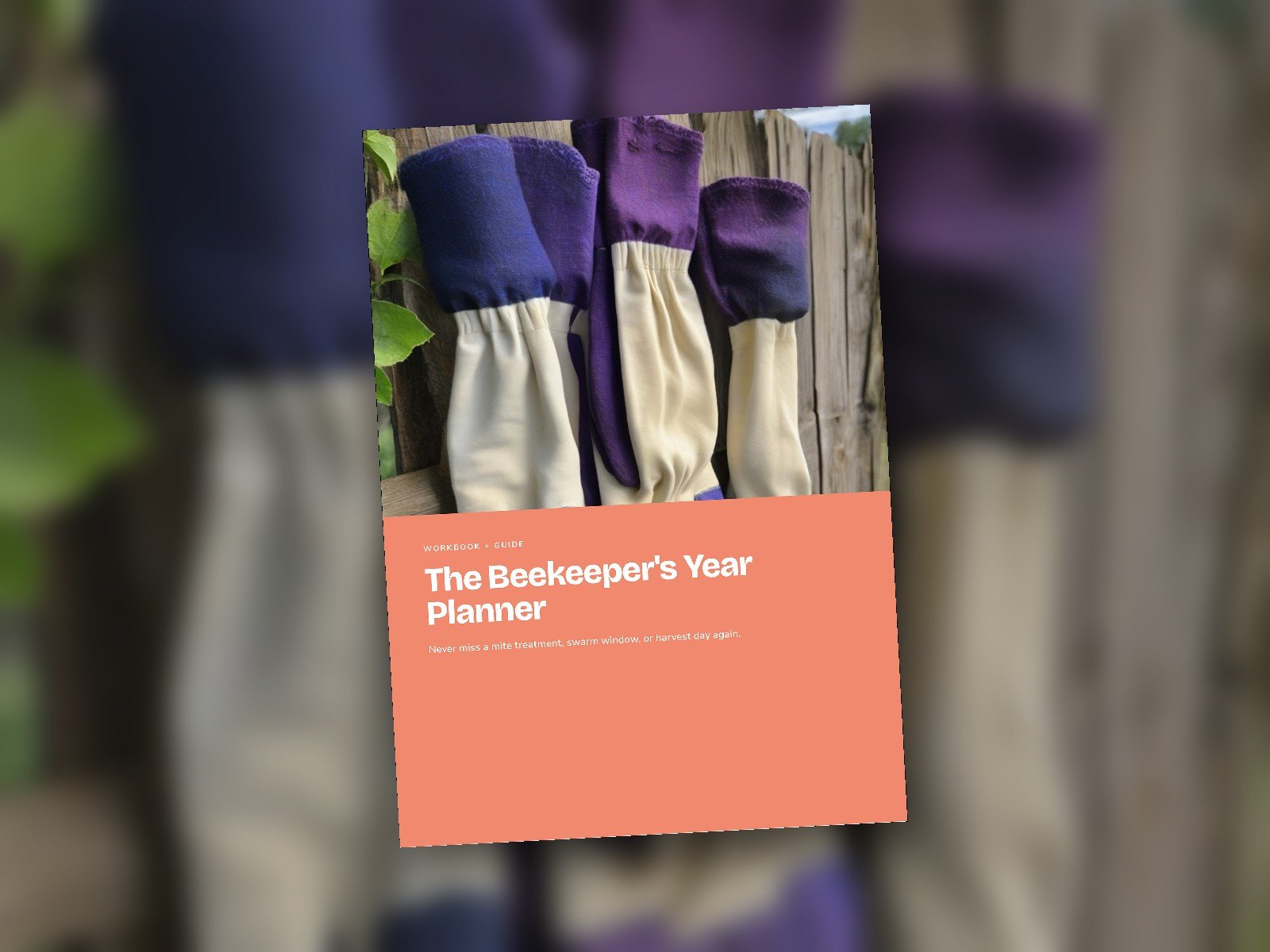
The Beekeeper's Year Planner is built for exactly this cycle: a seasonal task guide that walks mite treatments, swarm windows, and harvest days season by season, twelve inspection log pages, field lists for treatment, harvest, swarm, and apiary records, and an apiary map page — all printable, so next season's logs cost nothing. It is £11 in the books collection, and it stays in its lane: practical organization, not a substitute for local association or veterinary guidance.
Record-keepers in one domain often become record-keepers in others: The Savings Account Method applies the same seasonal-review discipline to money with a 90-day sprint blueprint. And for beekeepers who journal through the quiet months, Rooted in Grace: A Scripture-Anchored Gratitude Journal offers thirty guided days of verse-anchored reflection.
Start this inspection
Bring one printed log page to your next hive visit. Date, hive, five observations. That page, filed and reviewed in winter, is the first entry in the apiary history your future self will thank you for.
Related articles
2027-02-06 · 4 min read
Should I Buy a Beekeeping Planner? Who Actually Needs One
Beekeeping runs on timing: mite treatments in the right window, swarm prevention before the colony decides for you, harvest days that do not collide…
Read article →2027-02-08 · 3 min read
How to Log Hive Inspections Like a Pro (Fields, Frequency, Follow-Through)
Most inspection notes fail in one of two ways: the cryptic ("hive 2 ok??") or the novel (twenty minutes of prose nobody will ever re-read).…
Read article →2027-04-21 · 4 min read
How to Set Fence Posts That Stay Straight for Years
Every leaning fence you have ever seen failed at the same place: the posts. Pickets can be replaced in an afternoon, but a post that shifts, rots, or…
Read article →