
2027-04-14 · 3 min read
The Monthly Money Date: Why 15 Minutes Together Beats Hours of Budgeting Alone
One partner budgets alone for hours while the other stays happily oblivious — then resents every limit they never agreed to. The monthly money date…
By AeternusVita
We make the products recommended here.
One partner budgets alone for hours while the other stays happily oblivious — then resents every limit they never agreed to. The monthly money date fixes the asymmetry: a short, recurring, agenda-driven conversation where both partners look at the same numbers and make the same plan. Here is why it works and how to run one.
Alignment Beats Accuracy
A budget that one partner built alone is accurate and useless. Financial alignment — both people knowing the balances, the goals, and the trade-offs — outperforms spreadsheet precision every time, because plans only survive contact with real spending when both spenders own them. Fifteen minutes of shared attention beats three hours of solo optimization. The date is the budget's immune system.
What a Good Money Date Agenda Covers
Keep it to fifteen minutes with a fixed agenda: wins since last time (debts shrunk, savings grown — start with progress), the numbers snapshot (balances, spending vs. plan, upcoming irregular expenses), one decision (exactly one — extra debt payment, a sinking fund to open, a purchase to schedule), and a check-in (energy around money, 1–10 each). Fixed agenda, fixed length, fixed interval. Romance optional but encouraged — coffee, dessert, a couch.

From Avoidance Ritual to Date Night
Reframe relentlessly: this is not a finance meeting, it is maintenance on the marriage's most-avoided topic, and avoiding it costs more than any single argument. Couples who stick with money dates report the same arc — dread for the first three, neutrality by the sixth, genuine anticipation once the debt lines start bending. Track net worth quarterly alongside the monthly rhythm so progress is visible even when months feel flat.
Sinking Funds: the Argument Preventer
Most money fights are really ambushes by predictable expenses: holidays, car repairs, annual insurance. Sinking funds — small monthly allocations across a dozen categories — convert surprises into plans. Opening even three funds (gifts, car, travel) removes a disproportionate share of household tension, because the calendar stops mugging the budget.
The full practice typically grows to around twelve categories: gifts and holidays, car maintenance and registration, home repairs, medical deductibles, travel, subscriptions and annual renewals, clothing, pets, education, electronics replacement, celebrations, and a miscellaneous buffer. Fund them proportionally — divide each expected annual cost by twelve and automate the transfer the day after payday so willpower never enters the equation. Review the funds inside the money date each month: underfunded categories get topped up from the miscellaneous buffer or a trimmed discretionary line, never from the emergency fund, which guards against true surprises rather than scheduled ones. Within a year, the household experiences something unfamiliar — months where nothing unexpected happens to the money — and that calm is what converts skeptical partners into money-date regulars. The emergency fund sits behind all of this as the final backstop: three to six months of essentials, built slowly in a separate account, reviewed quarterly alongside net worth so both partners watch the safety net thicken.
How This Book Helps
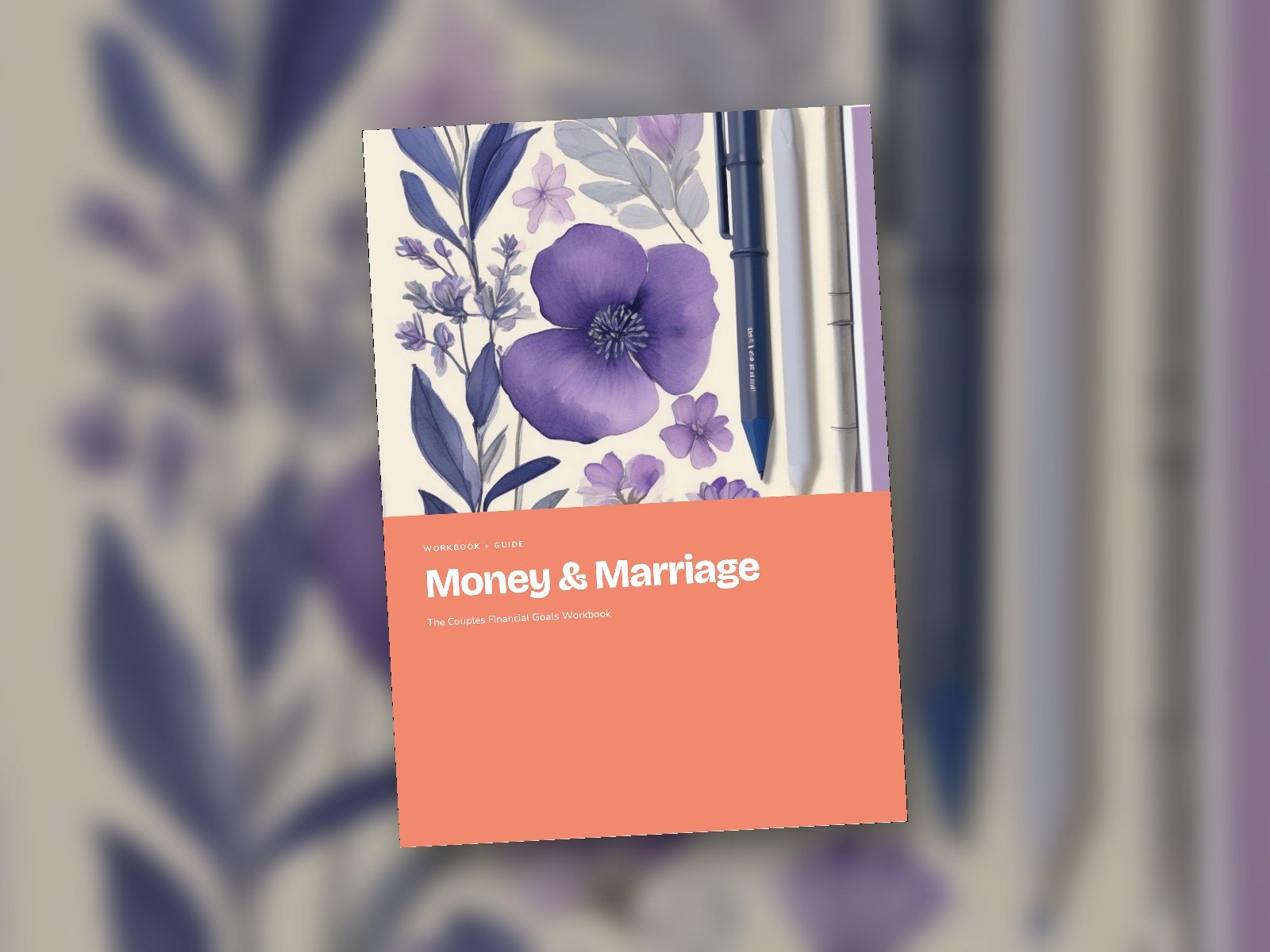
Money & Marriage: The Couples Financial Goals Workbook is built around this ritual — see it in our books collection. A 15-minute monthly money-date agenda template, twelve blank money-date logs, sinking-funds pages across twelve categories, a joint debt snowball tracker, an emergency-fund goal builder, 1/5/10-year goal pages, and a quarterly net-worth tracker. Educational financial content, not licensed advice — structure for the conversation, not a prescription.
If shared intentions matter to you beyond money, the 369 Manifestation Journal: 33 Days to Your Desire is a 33-day ritual some couples practice side by side. And for the stories behind the savings, the Family Memoir AI Interview Kit records what the older generation learned about money and life.
Related articles
2027-04-15 · 4 min read
Joint vs. Separate Accounts, Budget Templates, and Debt Payoff: a Couples How-To
Once the conversation is open and the money date is on the calendar, three mechanics do the heavy lifting: the accounts setup, the budget template, and…
Read article →2027-04-13 · 3 min read
How Do Couples Start Talking About Money Without Fighting?
Most couples do not fight about money because they disagree — they fight because they have never had a structured conversation about it. Each partner…
Read article →2027-02-28 · 4 min read
How Much Money Can a DIY Shed Walkthrough Save You? Real Numbers
"Build your own shed and save thousands" is easy to claim and hard to verify. Savings depend on size, materials, region, and how you value your time.…
Read article →