2026-11-14 · 3 min read
How to Help Your Indoor Cat Lose Weight Safely (Vet-Approved Approach)
Half of indoor cats now carry excess weight — and crash dieting a cat can be genuinely dangerous, risking a serious liver condition called hepatic…
By AeternusVita
We make the products recommended here.
“Half of indoor cats now carry excess weight — and crash dieting a cat can be genuinely dangerous, risking a serious liver condition called hepatic…”
Half of indoor cats now carry excess weight — and crash dieting a cat can be genuinely dangerous, risking a serious liver condition called hepatic lipidosis. Safe feline weight loss is slow, supervised, and fight-free. This guide explains the vet-first approach: pacing, portions, and the feeding changes that trim pounds without turning mealtimes into battles.
Step 1: Start with your vet, not the internet
Before changing anything, get a checkup: current weight, body condition score, target weight, and screening for conditions (thyroid, diabetes, arthritis) that affect the plan. Ask your vet for a daily calorie target and a safe loss rate — typically a small fraction of body weight per week, with regular weigh-ins to confirm progress.
This step is non-negotiable. Any weight-loss plan for a cat should be reviewed with your veterinarian first, and rapid or unsupervised restriction can cause serious illness. The guidance here is educational; your vet's numbers rule.
Step 2: Measure everything, free-feed nothing
Most overweight indoor cats got there on unlimited dry food. Switch to measured meals against the vet's calorie target: weigh food with a kitchen scale (cups are wildly imprecise), split the daily allowance into two or three meals, and count treats inside the budget — treats should be a small fraction of daily calories.
Transition gradually over a week or two by mixing increasing proportions of the new regimen, so digestion and morale both survive the change. Log every meal for the first month; what gets measured gets managed.
Step 3: Rethink the bowl, not just the food
Weight loss without the fight is mostly about delivery. Puzzle feeders and scatter feeding slow fast eaters and add mental work to every calorie. Scheduled mealtimes (pick up uneaten food after 20–30 minutes) create hunger rhythm instead of all-day grazing. Elevated or separated feeding spots give each cat a calm place to eat.
These changes reduce begging and stealing because the cat's day gains structure — food becomes an event with a beginning and end rather than a background anxiety.
Step 4: Add movement through play, not force
Cats do not jog; they hunt in bursts. Two or three short daily play sessions with a wand toy or crinkle ball — five minutes of stalk-pounce-catch ending in a "kill" reward — mimic natural hunting and burn meaningful calories for a small animal. Rotate toys to beat boredom, and end evening play with a small meal to complete the hunt-eat-groom-sleep cycle.
For stiff or senior cats, keep sessions gentle and short, and check with your vet about arthritis-friendly activity. Consistency beats intensity: daily micro-play outperforms occasional marathons.
How this book helps
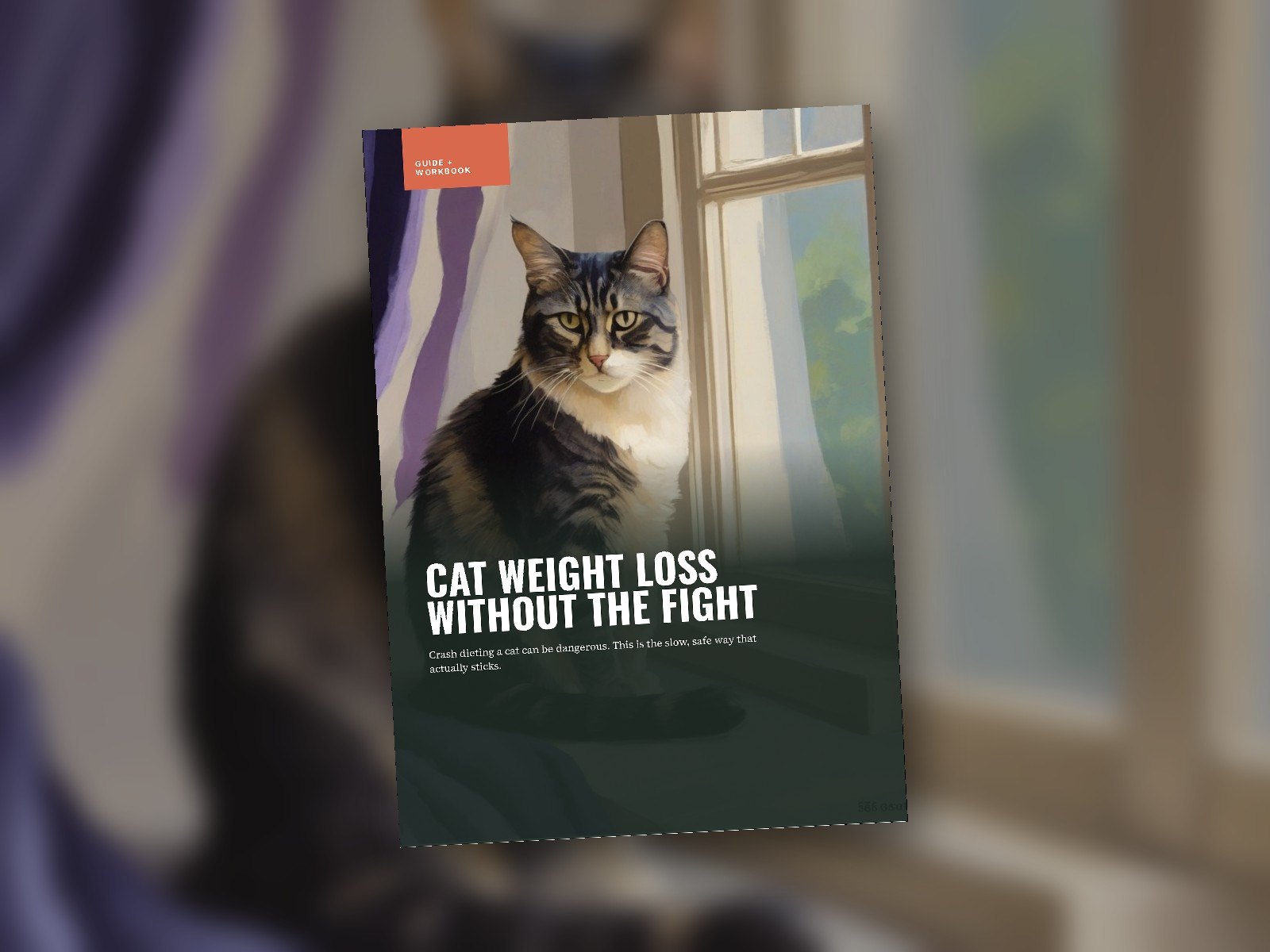
Cat Weight Loss Without the Fight (available here) gathers this approach into one gentle guide: safe calorie-reduction pacing, feeding-schedule strategies for multi-cat homes, enrichment-based activity ideas, and a weight-tracking log — all framed around vet supervision.
Multi-cat households should also read our companion post on stopping food fights below. And if the garden is your other happy place, the Composting Mastery System turns kitchen scraps into soil while you portion the cat's meals. For calmer humans behind all this care, the Anti-Anxiety Affirmation Card Deck offers 60 short steadying cards.
Educational guidance only — review any weight-loss plan with your veterinarian first.
Related articles
2026-11-16 · 3 min read
Feeding Two Cats When One Needs a Diet: Multi-Cat Meal Plans Without Food Fights
One cat needs to slim down; the other eats like a marathon runner. Feed them together and the wrong cat finishes both bowls. Separate them and someone…
Read article →2026-11-15 · 4 min read
Why Is My Cat Always Hungry? Begging, Portions and Vet-First Answers
A cat that yowls at the cupboard an hour after dinner is hard to resist — and hard not to worry about. Constant hunger in cats has a handful of common…
Read article →