2026-11-15 · 4 min read
Why Is My Cat Always Hungry? Begging, Portions and Vet-First Answers
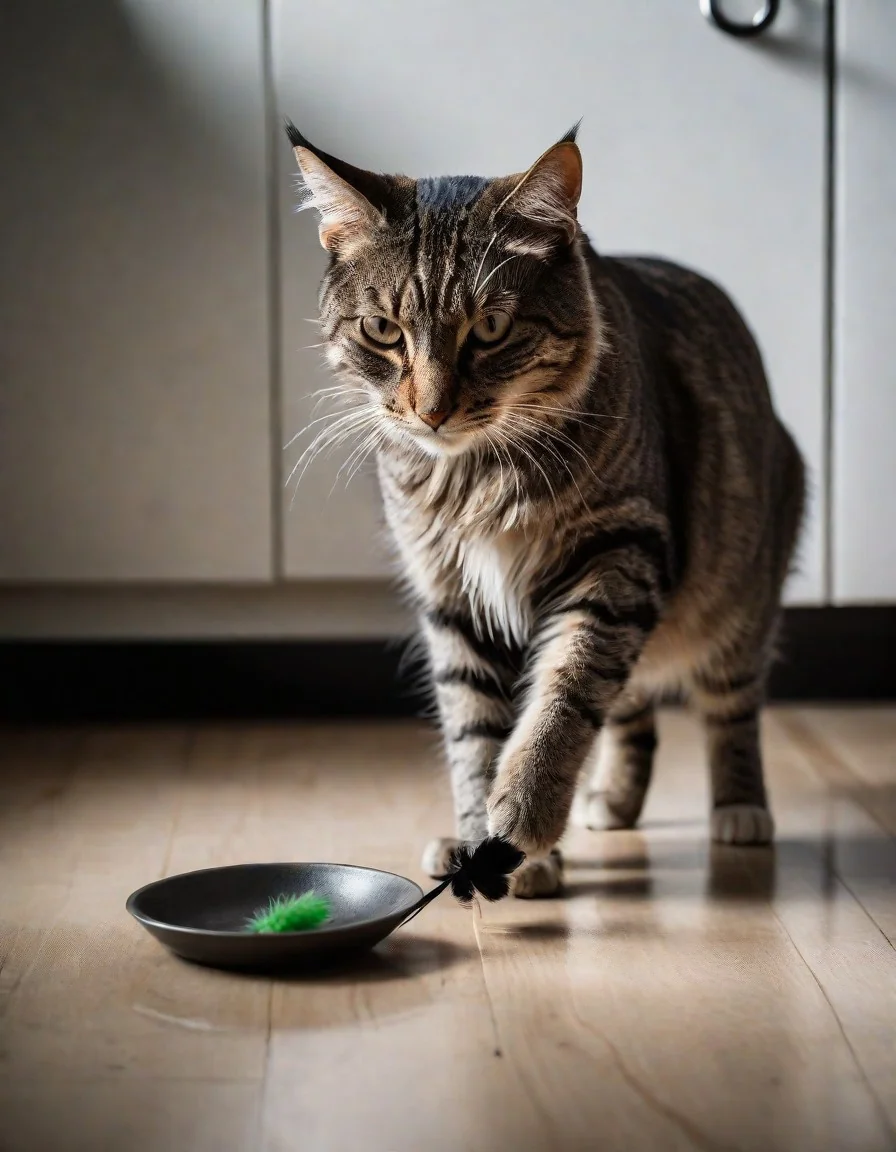
A cat that yowls at the cupboard an hour after dinner is hard to resist — and hard not to worry about. Constant hunger in cats has a handful of common…
By AeternusVita
We make the products recommended here.
A cat that yowls at the cupboard an hour after dinner is hard to resist — and hard not to worry about. Constant hunger in cats has a handful of common explanations, from learned begging habits to medical causes that deserve a vet visit. Before you pour a second helping, here is how to read the signals and respond in a way that keeps your cat healthy.
Rule out medical causes first
A sudden increase in appetite — especially paired with weight loss, extra thirst, vomiting, or restlessness — can point to thyroid trouble, diabetes, parasites, or malabsorption. Senior cats in particular can develop hyperthyroidism, which classically shows up as a ravenous cat that keeps losing weight. None of this can be diagnosed at home: if hunger has ramped up suddenly, book a vet checkup and mention the appetite change explicitly. Bring notes on what you feed, how much, and when the behavior started.
This step matters doubly for overweight cats, because unsupervised diet changes in cats carry a real risk of liver illness (hepatic lipidosis). Everything below assumes your vet has confirmed your cat is healthy or has set the feeding plan.
Most begging is habit, not hunger
Cats are superb trainers of humans. A meow that once earned a treat becomes a strategy, repeated at every kitchen visit. Free-fed dry food makes it worse: cats graze past fullness, then still perform hunger because eating has become entertainment or anxiety relief rather than nutrition.
Break the cycle with structure rather than willpower. Feed measured meals on a schedule and pick up uneaten food after 20–30 minutes. Count every treat inside the daily budget. Keep a one-week food log — most owners discover the "starving" cat is getting far more than they estimated once treats, toppers, and second-person feedings are counted.
Portions: measure by weight, not by scoop
Dry-food cups are notoriously imprecise, and a small daily overshoot compounds into pounds over a year. Ask your vet for a daily calorie target, then weigh food on a kitchen scale and split it into two or three meals. Transition to the new routine gradually over a week or two so digestion and morale survive the change.
Puzzle feeders and scatter feeding help here too: the same measured portion lasts longer, satisfies hunting instincts, and leaves the cat genuinely more content than a bowl inhaled in ninety seconds. Start simple — a muffin tin with balls over the compartments, or kibble scattered across a clean floor — and graduate to commercial puzzles as the cat learns. Wet food also helps many cats feel fuller per calorie because of its moisture content; ask your vet whether a partial switch suits your cat's plan.
Enrichment: the forgotten appetite suppressant
Bored indoor cats eat for something to do. Two or three short daily play sessions — five minutes of stalk-pounce-catch with a wand toy, ending in a small "kill" reward — burn energy and complete the hunt-eat-groom-sleep cycle. Rotate toys weekly, add a window perch or cardboard-box fort, and end evening play with dinner so the night feels finished.
Multi-cat homes add another wrinkle: a cat may inhale food to keep a housemate from stealing it, then beg again later. Separated, calm feeding spots give each cat permission to eat slowly and stop when full.
How this book helps
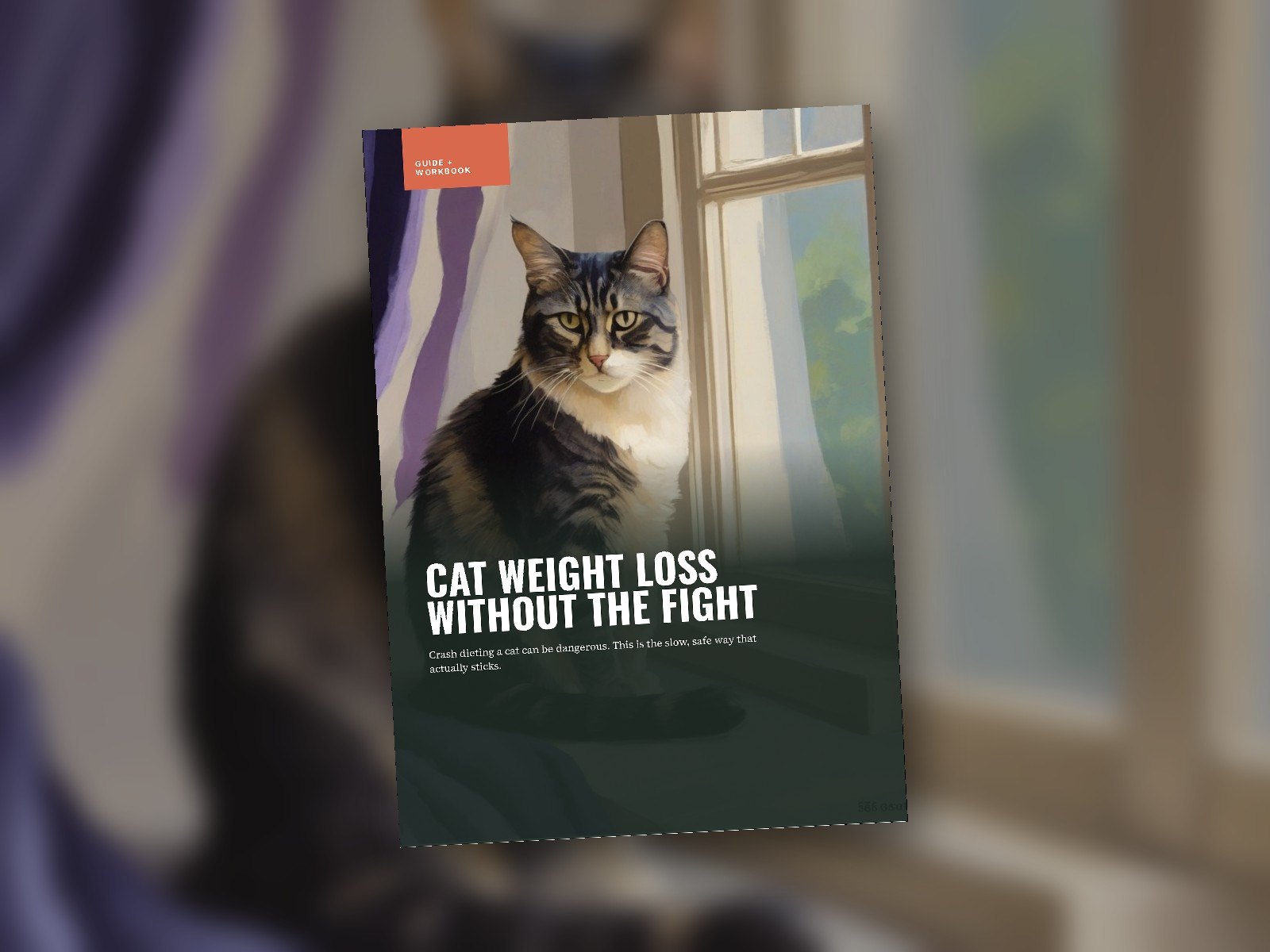
Cat Weight Loss Without the Fight (available here) gathers the vet-first approach into one gentle guide: a vet-set pace for changing portions, feeding-schedule strategies for multi-cat homes, enrichment-based activity ideas, and a weight-tracking log.
If your cats also squabble at mealtimes, you may like the Cat Behavior Decoder for reading the body language behind food guarding. And for the humans doing the worrying, the Container Gardening Complete System is a calm weekend project while the cats nap off their properly measured dinners.
Educational guidance only — review any feeding or weight-loss plan with your veterinarian first.
Related articles
2026-11-16 · 3 min read
Feeding Two Cats When One Needs a Diet: Multi-Cat Meal Plans Without Food Fights
One cat needs to slim down; the other eats like a marathon runner. Feed them together and the wrong cat finishes both bowls. Separate them and someone…
Read article →2026-11-14 · 3 min read
How to Help Your Indoor Cat Lose Weight Safely (Vet-Approved Approach)
Half of indoor cats now carry excess weight — and crash dieting a cat can be genuinely dangerous, risking a serious liver condition called hepatic…
Read article →