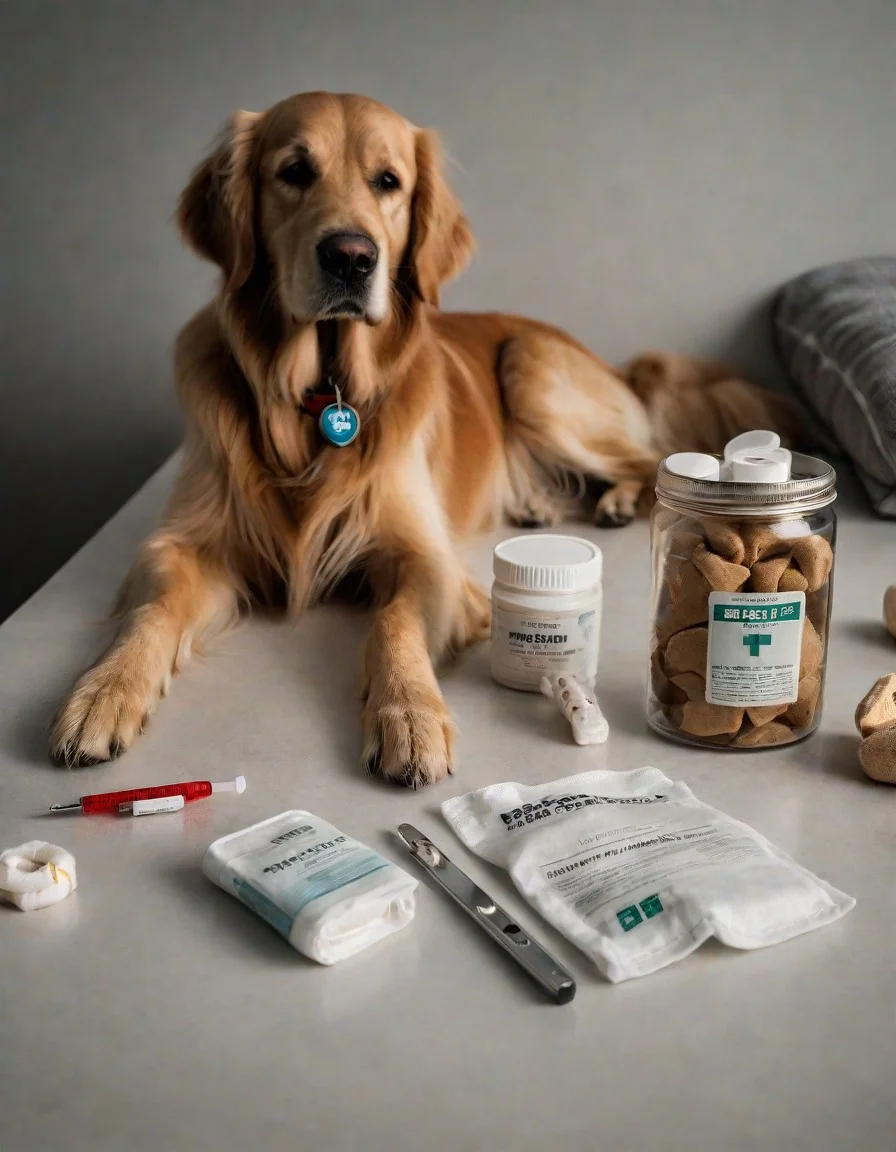
2026-12-07 · 4 min read
Pet Heatstroke and Poisoning: How to Respond Before You Reach the Vet
Two of the fastest-moving pet emergencies share a trait: the owner's first actions matter more than anything the clinic does later. In heatstroke, core…
By AeternusVita
We make the products recommended here.
“Two of the fastest-moving pet emergencies share a trait: the owner's first actions matter more than anything the clinic does later. In heatstroke, core…”
Two of the fastest-moving pet emergencies share a trait: the owner's first actions matter more than anything the clinic does later. In heatstroke, core temperature climbs toward organ damage in minutes. In poisoning, the clock on absorption starts the second the substance is swallowed. Both reward a rehearsed response and punish improvisation. Here is the stabilizing sequence for each — what to do, what never to do, and what the vet will need to know.
Heatstroke: Cool Gradually, Move Fast
Heatstroke hits dogs hardest — especially flat-faced breeds, seniors, puppies, and overweight dogs — but cats in hot cars or unventilated rooms are vulnerable too. Warning signs: heavy frantic panting, thick drool, bright red or purple gums, staggering, vomiting, collapse. If you see this on a hot day, assume heatstroke and act while someone calls the ER clinic.
Move the animal to shade or air conditioning immediately. Begin gradual cooling: cool (not cold) water over the body, especially the neck, armpits, and groin; a fan if available; offer small sips of cool water but never force drinking. The critical prohibition: no ice and no ice water. Icy cold constricts surface blood vessels and can trigger shivering, both of which trap heat inside and worsen the crisis. Cool steadily during transport and keep cooling on the way — the drive is treatment time, not waiting time.
At the clinic, report the estimated heat exposure duration, the peak signs you saw, and everything you did. Even dogs that look recovered need examination: heat injures kidneys, gut lining, and clotting systems in ways that surface hours later.
Poisoning: Call First, Act Second
Dogs eat chocolate, xylitol gum, grapes, medications, and rat bait; cats find lilies, essential oils, and flea products meant for dogs. Signs vary — vomiting, drooling, tremors, seizures, collapse, or nothing at all for hours — which is exactly why you never "wait and see" with a known ingestion.
Step one is always the call: your vet, the ER clinic, or poison control, with the substance name or packaging in your hand, the estimated amount, the time of ingestion, and your pet's weight. Step two is following their instructions exactly. The critical prohibition: never induce vomiting unless a veterinary professional explicitly tells you to. Many substances — corrosives, petroleum products, sharp objects — cause far worse damage coming back up, and an impaired animal can aspirate vomit into the lungs. Home "remedies" from forums (salt, oil, milk) range from useless to dangerous.
Save the packaging, note the time, and keep the animal calm and confined during transport. If advised to bring a vomit sample, do so in a sealed bag — vets can work with it.
Seizures and Bleeding: The Thirty-Second Versions
Two more scenarios worth rehearsing while you're at it. Seizure: clear the area of furniture and sharp objects, dim lights, do not restrain and never put fingers near the mouth, time the episode, and call the vet if it exceeds a few minutes or repeats. Bleeding: apply firm direct pressure with gauze or clean cloth, layer bandages over soaked ones rather than removing them, elevate if possible, and drive — pressure maintained during transport is the treatment.
Rehearsal Beats Reading (So Print This Thinking)
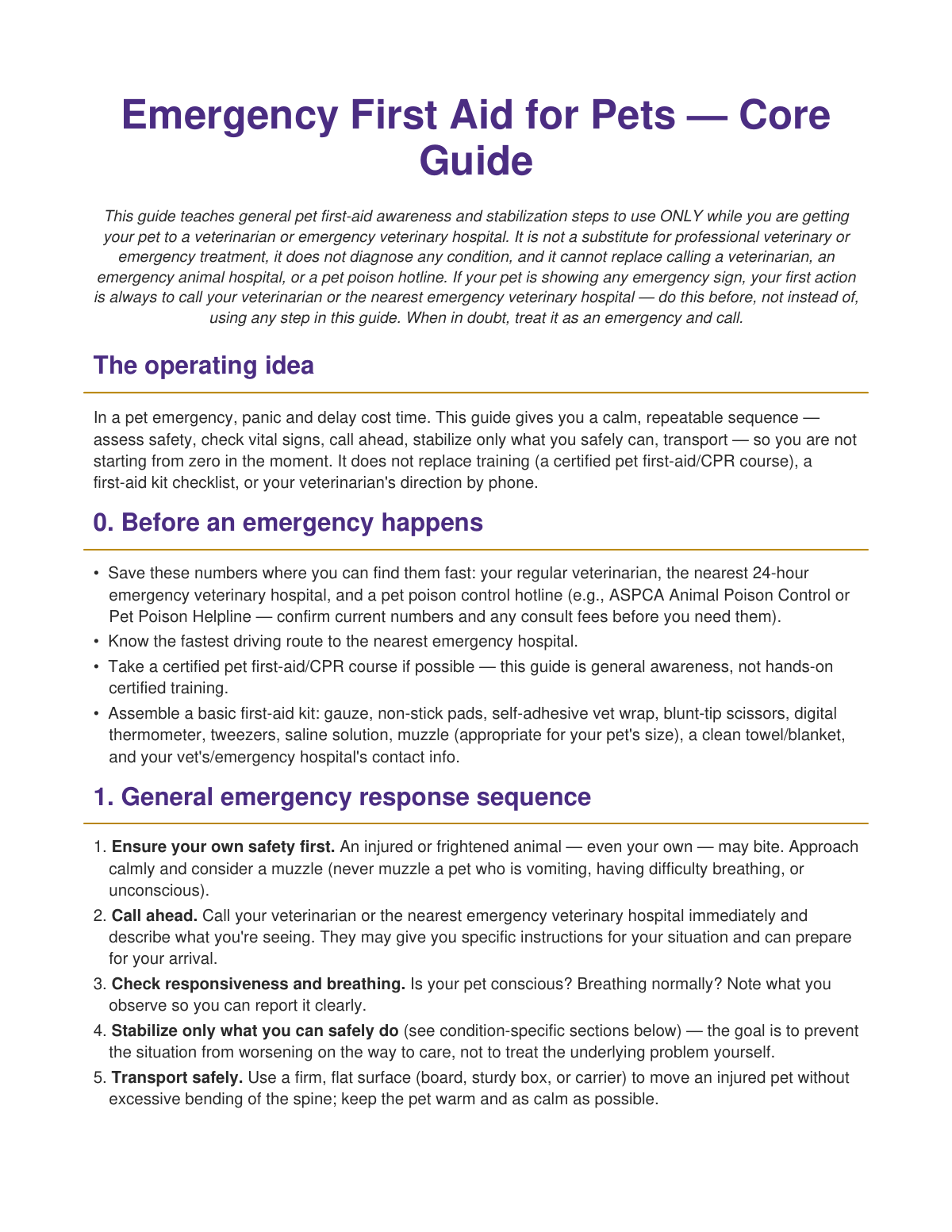
None of these sequences survive first contact with panic unless rehearsed. Walk your household through the locations (kit, card, carrier, car keys), the numbers (vet, ER, poison control), and the prohibitions (no ice, no forced vomiting, no home splinting) once — ten minutes, out loud. Then keep the printed reference where the emergency will happen: by the door, not in a bookmark folder.
How This Book Helps
Emergency First Aid for Pets puts all of this on paper: heatstroke cooling steps, poisoning call-first protocols, choking, bleeding, and seizure responses, a home first-aid kit checklist, and a fill-in emergency contact card. Print it, post it, and turn panic into procedure. (Response guidance only — always consult your vet for medical symptoms; never a substitute for veterinary care.)
For happier pet projects, Custom Pet Portrait AI Prompts turns favorite photos into storybook portraits. And homeowners preparing for all kinds of emergencies can pair this with the DIY Solar Panel Installation Guide for backup-power self-sufficiency.
Related articles
2026-12-06 · 4 min read
Why Every Pet Home Needs a First-Aid Kit and an Emergency Contact Card
Nobody plans a pet emergency. The dog eats the dropped medication on a Sunday evening. The cat slices a paw on a broken glass nobody noticed. The power…
Read article →2026-12-05 · 4 min read
What Should I Do If My Dog Is Choking? The First 60 Seconds That Matter
It happens in seconds: the panicked pawing at the mouth, the retching with no sound, the wide terrified eyes. A choking dog cannot wait for a vet visit…
Read article →2027-03-28 · 3 min read
How to Set Up Your Emergency Sub Folder: Cover Sheet, Schedule, Roster and Report
A how-to guide for the single highest-leverage Sunday project in teaching: building the emergency sub folder that lives in a known spot and saves every…
Read article →