
2026-12-30 · 4 min read
How Sleep and Soreness Tracking Improves Athletic Performance
Performance isn't built in practice — it's built in the recovery between practices. Two athletes can train identically and develop differently, and the…
By AeternusVita
We make the products recommended here.
Performance isn't built in practice — it's built in the recovery between practices. Two athletes can train identically and develop differently, and the difference is almost always what happens in the other 22 hours: sleep quality, soreness management, nutrition, stress. Tracking those inputs is the closest thing youth sports has to a legal performance enhancer. Here's how each tracked metric converts to results.
Sleep: the primary performance input
Sleep is where adaptation happens — muscle repair, memory consolidation (yes, for plays and technique), growth hormone release, all concentrated in deep sleep. A student athlete on six hours isn't recovering; they're surviving. Reaction time, decision-making, and injury risk all degrade measurably with sleep debt, which means the tired athlete isn't just tired — they're slower, sloppier, and more fragile, all at once.
Tracking sleep (hours plus a simple 1–10 quality rating) reveals the patterns that grades and training hide: the late-game-adrenaline nights, the phone-till-1am slide, the exam-week collapse. Once visible, they're fixable — consistent bedtimes, screen curfews, wind-down routines. Many families discover sleep is the single biggest lever in their athlete's performance, bigger than any drill or supplement. You can't optimize what you don't log, and most families have never logged a single week.
Soreness mapping: signal versus noise
All soreness is not equal. General muscle fatigue after hard sessions is normal adaptation. Sharp, localized, or one-sided pain persisting across days is signal — the kind that deserves a trainer's eyes. Without a log, athletes can't tell you which they've had, because memory compresses three weeks of "my knee kind of hurt" into "it's fine" until it isn't.
A daily soreness note — where it hurts, what kind (ache, sharp, tight), 1–10 level — draws the distinction automatically. Bilateral post-leg-day ache fading in 48 hours: noise, train on. Same-spot pain three sessions running, or anything sharp: signal, report it. Teaching young athletes this distinction is injury prevention in its most practical form — not a lecture but a daily two-line habit that builds body literacy season over season.
Training load: the accelerator and the brake
Load management sounds professional because it is — but the concept is simple: big jumps in training volume cause problems; gradual ones build fitness. When school season overlaps club season, or a new coach doubles sessions, total load can spike 50–100% with nobody noticing, because each practice looks reasonable alone. The log adds them up.
Rating daily load (minutes × intensity, or a simple 1–10) alongside recovery metrics lets families see the collision coming: load climbing while sleep falls and soreness rises is the classic pre-injury signature. The response isn't panic — it's adjustment: an extra rest day, lighter week, conversation with the coach armed with numbers. Load tracking turns "overtraining" from a vague fear into a visible, manageable variable.
Mood, nutrition, and the whole-athlete picture
Mood tracking catches what performance metrics miss: the athlete who's physically fine but mentally fried. Motivation dips, irritability, dreading practice — logged daily, these reveal burnout months before quitting. Youth sports loses more talent to burnout than to injury, and mood logs are the early warning system nobody installs.
Simple nutrition and hydration notes (meals eaten, ounces drunk — logged, with targets set by the family's trainer, not a workbook) complete the picture. Patterns like "bad practices follow skipped breakfasts" emerge fast and fix easily. The weekly summary then compresses everything — sleep, soreness, load, mood, fuel — onto one page that turns every adult in the athlete's circle from guesser to informed teammate.
How this book helps
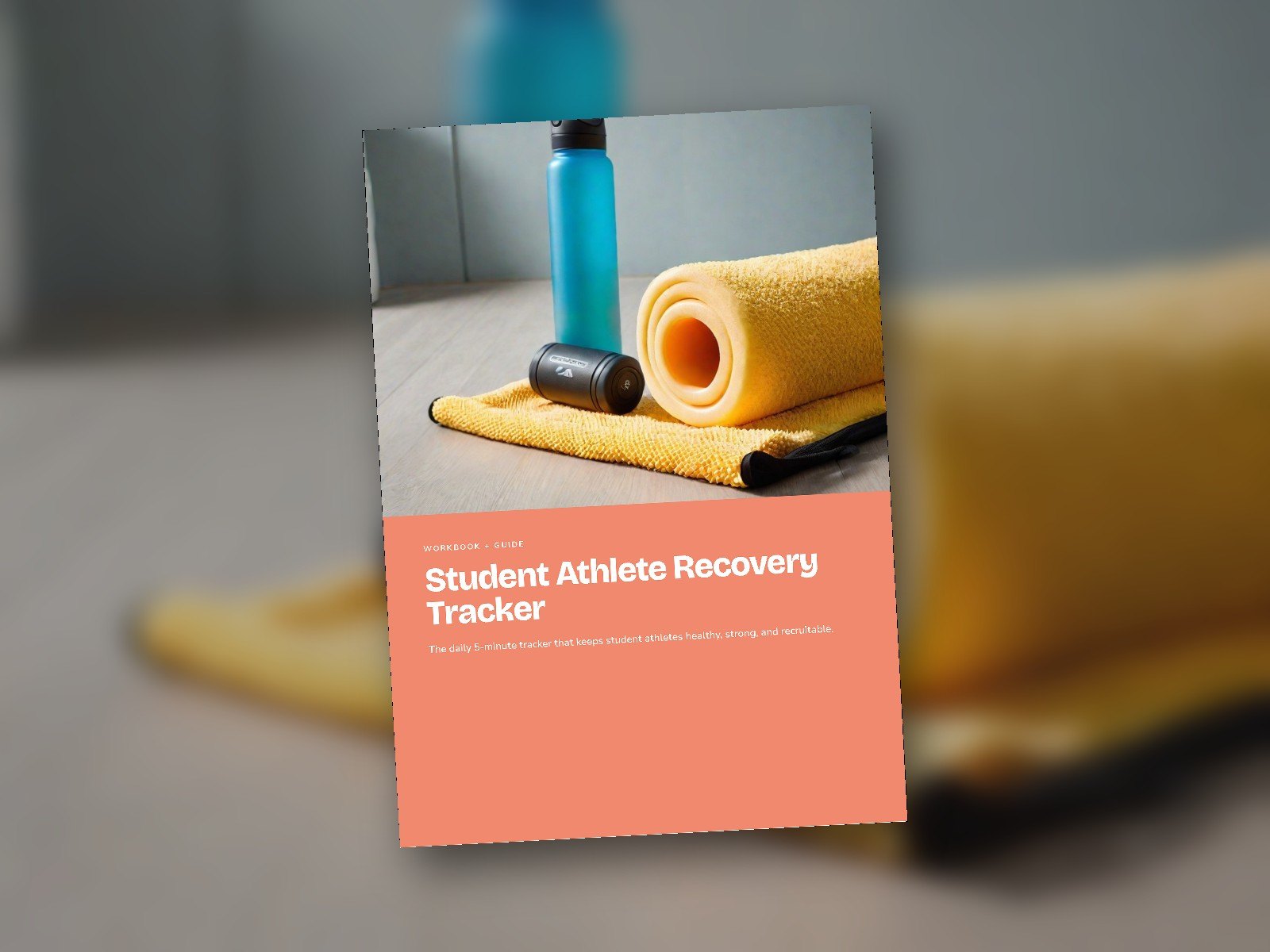
The Student Athlete Recovery Tracker logs all of it: sleep, nutrition, soreness mapping, mood, training load, injury watchlist, and the coach-share weekly summary — five minutes a day on printable pages. A tracking tool, not a substitute for an athletic trainer or physician; log ounces and meals, and ask your trainer about targets.
Anchor the daily log with Habit Stacking Mastery techniques, and track the family's own wellbeing with The Operator's Journal.
Recovery is training. Log it like it matters — because it does.
Related articles
2026-12-31 · 4 min read
How Do You Turn Daily Training Logs Into a Conversation a Coach Will Act On?
Logging sleep, soreness, and training load every day is only half the job. The other half is the weekly review — ten minutes that compress seven days…
Read article →2026-12-29 · 4 min read
Should Student Athletes Track Their Recovery?
Parents spend thousands on clubs, gear, and camps — then manage recovery on vibes. "How are you feeling?" gets "fine," and fine covers everything from…
Read article →2027-02-26 · 3 min read
How to Use a 14-Day Sleep Tracker to Fix Toddler Night Wakings
Night wakings blur together in an exhausted parent's memory. Was it two wakings or five? Did the early bedtime help or hurt? Without a record, you…
Read article →