
2026-12-29 · 4 min read
Should Student Athletes Track Their Recovery?
Parents spend thousands on clubs, gear, and camps — then manage recovery on vibes. "How are you feeling?" gets "fine," and fine covers everything from…
By AeternusVita
We make the products recommended here.
Parents spend thousands on clubs, gear, and camps — then manage recovery on vibes. "How are you feeling?" gets "fine," and fine covers everything from fresh to one bad landing from injured. A simple daily log of sleep, soreness, and training load costs five minutes and answers the questions that actually matter: is my kid recovering, adapting, or breaking down? Here's the case for tracking.
"Fine" hides the patterns that predict problems
Young athletes are terrible reporters of their own state — not from dishonesty, but from normalization. Soreness that builds over three weeks feels like "normal" by week three. Declining sleep gets blamed on homework. A dip in mood reads as attitude. Each data point in isolation looks fine; the trend across weeks tells a different story that no single conversation reveals.
A daily log makes the invisible visible: sleep hours, soreness location and level, training load, mood, plus an injury watchlist for niggles worth mentioning. After a month, patterns emerge that change decisions — the athlete who's always wrecked on Thursdays needs Wednesday load adjusted, not a lecture on toughness. Coaches and athletic trainers consistently say they'd rather see four weeks of data than hear "she's been tired lately." Data gets action; vibes get shrugs.
Overtraining is a youth sports epidemic, not a badge
More practices, more showcases, more year-round single-sport specialization — today's student athletes train like professionals without professional recovery infrastructure. Overuse injuries in youth sports keep climbing, and the mechanism is almost always the same: load rose faster than recovery, nobody measured either, and the first warning anyone noticed was the injury itself. The log doesn't prevent injury — no tracker can promise that — but it surfaces the workload-recovery mismatch weeks before breakdown.
The critical insight for parents: rest is training. Adaptation happens during recovery, not during practice. An athlete sleeping six hours through a heavy week isn't building fitness; they're accumulating fatigue that practice then compounds. A tracker reframes the conversation from "are you working hard enough?" to "are you recovering hard enough?" — which is the question that keeps kids healthy and, frankly, recruitable.
The coach conversation changes completely
Walk into a meeting with "he seems tired" and you get reassurance. Walk in with a weekly summary — sleep averaging 6.5 hours, soreness in the same knee three weeks running, load up 40% since the new schedule — and you get a plan. Coaches respect organized information; it signals a serious family and gives them something concrete to adjust. The coach-share summary is arguably the tracker's highest-value page: one page, one week, everything that matters.
It also protects the athlete. Kids who won't complain to coaches (most of them) get representation through the log — the numbers advocate where the kid stays quiet. And trainers can spot at a glance whether a complaint is a one-day blip or a three-week trend. Everyone in the athlete's circle makes better decisions with shared data instead of competing impressions.
Five minutes beats perfect: why simple logs win
Elaborate sports-science apps fail for student athletes because they demand too much: wearables, subscriptions, syncing, dashboards nobody opens. A printable log asking for sleep, soreness, load, mood, and fluids takes five minutes — attach it to an existing routine (after brushing teeth, on the ride home) and compliance stays high all season. The best tracker is the one filled in daily, and simplicity is what gets filled in.
Parents: make it the athlete's job, not yours. Ownership builds body awareness — the skill of noticing "my knee has hurt three days" before it becomes "my knee gave out." That awareness is a career-long asset no coach can install. Your job is buying the tracker and asking about the weekly summary. Their job is five honest minutes.
How this book helps
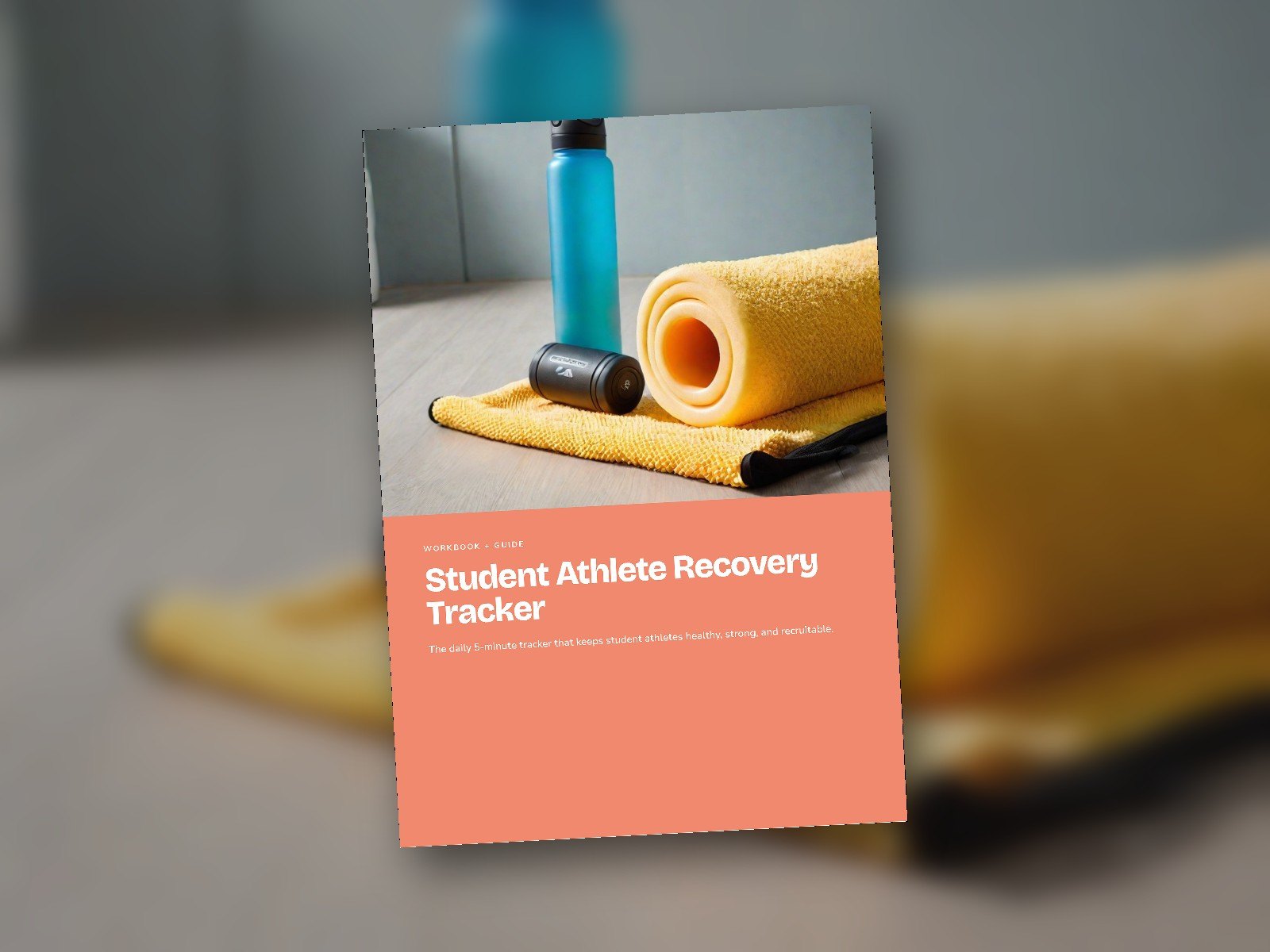
The Student Athlete Recovery Tracker is this system ready-made: a printable daily log covering sleep, nutrition, soreness mapping, mood, training load, and injury watchlist, plus a coach-share weekly summary. A tracking tool, not a substitute for an athletic trainer or physician — it organizes what you report to the professionals.
Make the five minutes automatic with anchor techniques from Habit Stacking Mastery. And for fathers managing their own stress on the sidelines, The Operator's Journal tracks the parent's side of the season.
Stop guessing. Start logging. Five minutes a day.
Related articles
2026-12-31 · 4 min read
How Do You Turn Daily Training Logs Into a Conversation a Coach Will Act On?
Logging sleep, soreness, and training load every day is only half the job. The other half is the weekly review — ten minutes that compress seven days…
Read article →2026-12-30 · 4 min read
How Sleep and Soreness Tracking Improves Athletic Performance
Performance isn't built in practice — it's built in the recovery between practices. Two athletes can train identically and develop differently, and the…
Read article →2027-03-08 · 3 min read
Should Women Train Differently Across Their Cycle? What Cycle Syncing Gets Right
Most fitness programmes were designed around a simple 24-hour routine: train hard, eat the same, repeat daily. But many women notice their energy,…
Read article →