
2027-01-06 · 3 min read
How to Use the 50 Prompt Lines and First-Four-Weeks Plan
Buying an ideas book is easy. Using it is the hard part. This guide shows you how to work the two most practical features of an AI side-project…
By AeternusVita
We make the products recommended here.
Buying an ideas book is easy. Using it is the hard part. This guide shows you how to work the two most practical features of an AI side-project overview: the blank prompt lines for developing your own angles, and the first-four-weeks plan that turns a picked idea into a real test.
Start with the first-week task, not page one
Each of the ten ideas comes with a first-week task — a small, concrete action that tests the idea's fit. Don't read the whole book passively and then decide. Read one idea, do its task, then read the next. By the end you'll have ten micro-experiments behind you instead of ten highlighted pages.
How to fill the 50 blank prompt lines
The book includes 50 blank prompt lines for you to fill with your own AI prompts. Here's how to use them well:
- For each idea that interests you, write 3–5 prompts you'd actually use to serve that market (e.g., draft a service offer, outline a content piece, analyze a competitor).
- Run each prompt in your AI tool of choice and note what worked.
- Star the prompts that produced genuinely useful output — those reveal which idea plays to your strengths.
By line 50, you'll have a personal prompt library tuned to your pick, not someone else's generic pack.
Week by week: running the first-four-weeks plan
The plan breaks your first month into stages. Week one is exploration: run the first-week tasks and score each idea. Week two is commitment: pick your top idea and define a tiny offer or prototype. Week three is exposure: show it to real potential users and collect feedback. Week four is the decision: double down, adjust, or swap to your runner-up idea with everything you learned.
What to do after week four: the three outcomes
Week four ends with a decision, and all three outcomes are wins if you're honest. Outcome one: traction — someone paid, subscribed, or asked for more. Double down and set a second four-week target. Outcome two: signal but no sale — people engaged but didn't buy. Adjust one variable (the offer, the audience, or the price) and run a second four-week test. Outcome three: silence — nobody cared. That's data, not failure: return to your scored list, pick the runner-up, and start over with everything you learned about execution speed. Most successful side projects are second or third attempts wearing the muscles built by the first. The plan's real product isn't the project — it's you as someone who tests ideas in weeks instead of debating them for months.
Common mistakes that stall beginners
Three traps to avoid. First, picking the idea that sounds most lucrative instead of the one closest to your skills. Second, skipping the blank-line exercises and going back to passive reading. Third, extending "research mode" past week one — the plan works because it forces contact with reality early.
How this book helps
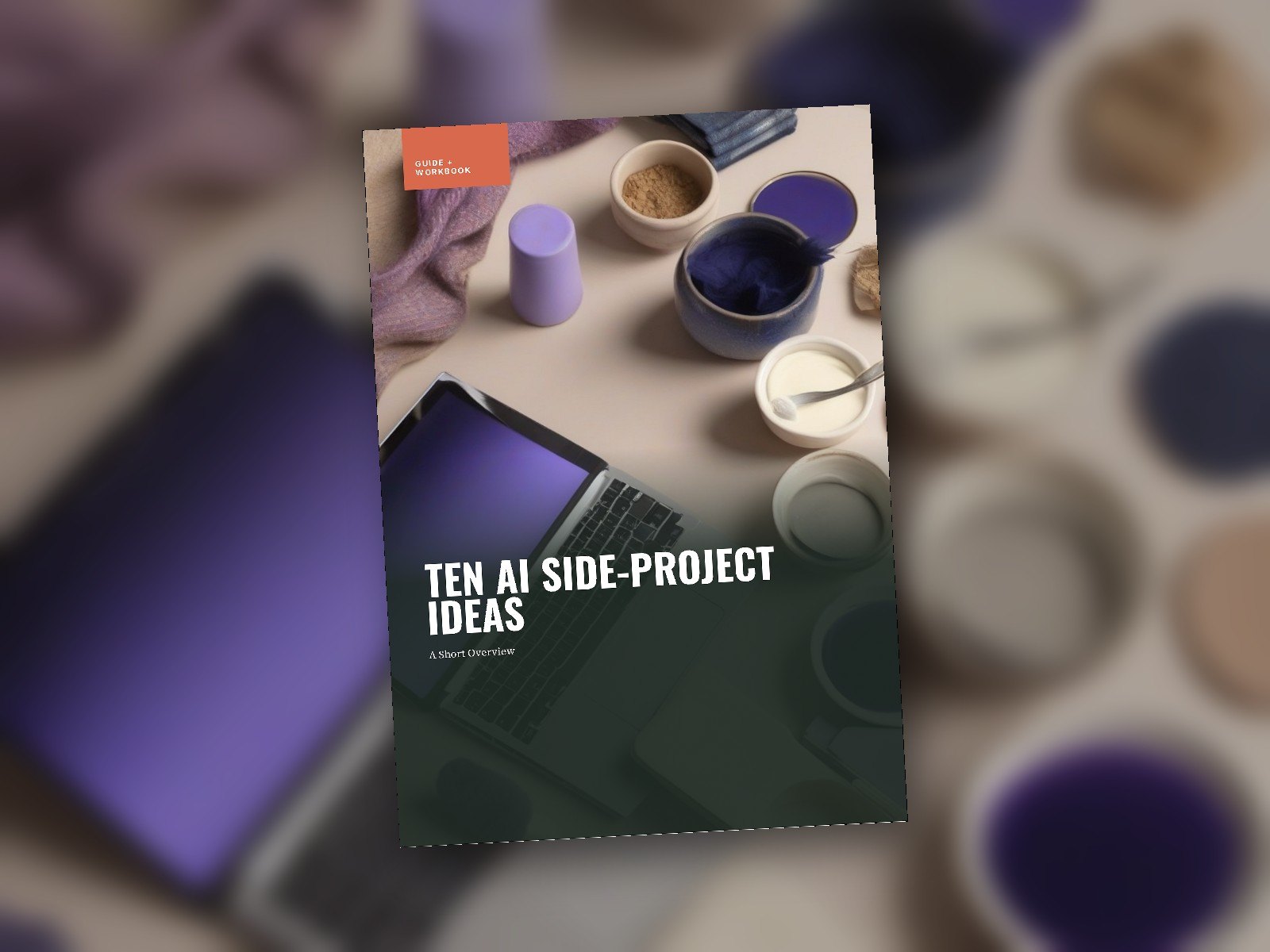
Ten AI Side-Project Ideas: A Short Overview gives you the full toolkit: ten ideas with market, cost, tools, and scaling notes, 50 blank prompt lines, and the first-four-weeks plan described above — all with zero income hype, educational content only.
To keep a daily written record of your four-week test, the one-line daily ledger in The Manifestation Scripting System is a natural companion. And to start each build day with intention, try The Money Magnet Morning Ritual and its fifteen-minute morning sequence.
Related articles
2027-01-05 · 3 min read
How an Honest AI Ideas Overview Helps You Pick Your First Project
The hardest part of starting an AI side project isn't the technology — it's choosing. There are dozens of plausible directions, every YouTuber shouts a…
Read article →2027-01-04 · 3 min read
Should I Buy an AI Side-Project Ideas Book? An Honest Answer
You've seen the promises everywhere: "Turn ChatGPT into income in 30 days!" with dollar figures that smell like fiction. If that hype is exactly what…
Read article →2027-03-29 · 3 min read
How Do Quilters Keep Track of UFOs, Fabric Stash and Pattern Ideas?
Ask a quilter how many projects they have going and watch them laugh: a quilt on the frame, two tops waiting for binding, a drawer of patterns, and a…
Read article →