2026-10-25 · 5 min read
Pocket Dioramas: A Seated VR Puzzle About Rebuilding One Small Room
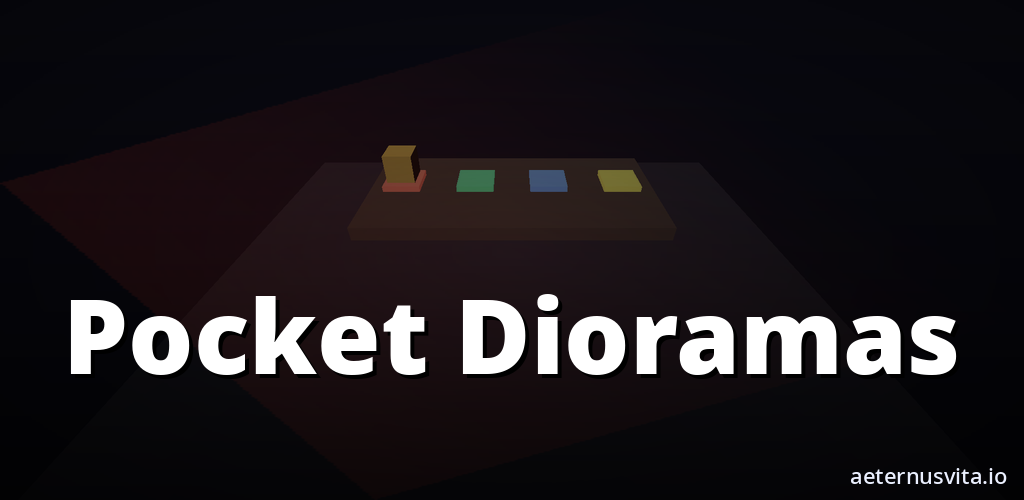
How Pocket Dioramas works — a seated VR puzzle where you rebuild a small room piece by piece.
By AeternusVita
“How Pocket Dioramas works — a seated VR puzzle where you rebuild a small room piece by piece.”
Pocket Dioramas is a seated puzzle for a VR headset. A small room sits in front of you, taken apart. You piece it back together until it is one place again.
It is a short, clear idea. One room. One puzzle. You stay in your chair and work through it at your own pace. When the diorama holds together, you have a finished model you can look over.
This post explains what the game is, how it works, and who it suits. Pocket Dioramas is coming soon on aeternusvita.io. You can get notified from the product page when it is ready.
What Pocket Dioramas is
Pocket Dioramas is a seated puzzle you play in a VR headset. The brief is simple: sit and piece a small room into one diorama.
At the start, the room is in front of you and it is not whole. The parts are separated. You read the shapes in front of you and fit them back into the scene. You keep going until the diorama is one place again.
The subtitle on the listing is "Seated diorama puzzles". That sums up the scope. It is not a large world to travel through. It is a small space you assemble and then view. The finished result is a room you can look around, built from the pieces you placed.
Pocket Dioramas is made by aeternusvita.io for a quiet sitting. The description in the Play listing puts it plainly: it is one room and one puzzle, and a finished model you can look over.
How it works when you are seated
You play seated. You stay in your chair the whole time.
The diorama sits in front of you at a comfortable distance. You do not need to stand, walk about the room, or clear floor space for large movements. The design keeps everything within reach from a chair, so you can focus on the puzzle itself.
You play in a VR headset. The game runs on the headset itself, and it can also run on a headset linked to a computer. Either way, you remain seated while you work.
This seated setup shapes how the puzzle feels. You look at the diorama head-on, like a model on a table. You check the shape from different angles, reach for a part, and place it.
Pick up, turn, and place
The core loop is straightforward: pick up a part, turn it, and set it where the room needs it.
You read the shapes first. Each piece has a form that hints at where it goes. You pick it up and turn it until the orientation looks right, then set it into the room.
Piece by piece, the small space becomes a room you can look around. The diorama begins to hold together. You continue until it does.
The feature list from the Play copy reflects this directly:
- Play seated in a VR headset
- Turn each piece and place it in the room
- Assemble the diorama until it holds together
You handle one piece at a time. The room takes shape as you go.
Pace, stopping, and coming back
You choose the pace. You can work through the puzzle steadily, or take your time with each piece before you place it. You can stop when you want. A score records the puzzle you finished, and your score is saved so you can come back.
That means a session can be short. If you need to pause, you can. The record stays saved, so you can return without losing that mark of completion.
The finished model
When the diorama is complete, you have a finished model you can look over.
You are not only solving for a score. You are building a small, coherent room and then spending a moment with it.
The listing notes that a score records the finished puzzle. That score is a simple record that you completed it. It stays saved. It marks the puzzle as done.
Who it suits
Pocket Dioramas suits people who like quiet, hands-on puzzles and want that kind of puzzle in a headset without needing to stand or move around.
It suits you if you:
- Prefer seated play in VR. You want to stay in your chair and keep the puzzle in front of you.
- Like spatial puzzles where you read shapes and fit them into a scene.
- Want a calm session with a clear end point. One room, one assembly, one finished model.
- Like to go at your own pace and stop when you want, knowing your score is saved to return to.
It is also a good fit if you share a headset. The action is easy to explain: pick up a part, turn it, place it where the room needs it, repeat until the diorama holds together. There is no long tutorial to learn before you start.
What you need to play
You play in a VR headset. The Play copy says the game runs on the headset itself, and it can also run on a headset linked to a computer.
The brief lists the target platforms as Meta Quest, Android XR and Web, with a hosted web build that has passed a smoke test. Packages are ready for Quest and Android XR, pending store accounts. All of that points to the same core requirement on your side: a VR headset for seated play.
You stay in your chair, handle one piece at a time, and place it in the room. The interaction is kept to that loop so the focus stays on the puzzle.
Coming soon — how to hear when it is ready
Pocket Dioramas is coming soon. It has not been released or submitted to stores yet, so there is no price, release date, or store rating to share at this stage. That is intentional while the team works through the remaining store steps.
If you want to know when it is ready, the best place is the product page. Head to Pocket Dioramas and use the notify option there. That is where updates will appear first.
To recap: you sit in a VR headset, read the shapes of a small room that has been taken apart, and fit them back into place until the diorama is one place again. You pick up each part, turn it, and set it where it is needed. A score records the puzzle you finished and stays saved so you can come back. It is one room, one puzzle, and a finished model you can look over — built at your own pace, from your chair.
Related articles
2026-10-25 · 7 min read
Chair Quest: Seated Reach Adventures in VR Calibrated to Your Range
How Chair Quest works — calibrate your reach, follow the sequence in VR and review your consistency.
Read article →2026-10-25 · 6 min read
Afterburn: How an Arcade Fitness Session Works in a VR Room
How Afterburn works — an arcade fitness session in VR where you repeat one action in one room to a score.
Read article →2026-10-25 · 6 min read
AfterShift: How an Active Fitness Session Works in One VR Room
How AfterShift works — an active fitness session in VR where you practise one movement in one room to a score.
Read article →