2027-03-20 · 3 min read
How Do You Plan a Full Homestead Year Without Dropping Anything?
Every January, homesteaders make the same resolution: this year, nothing falls through the cracks. By July, the cracks have the canning jars, the…
By AeternusVita
We make the products recommended here.
“Every January, homesteaders make the same resolution: this year, nothing falls through the cracks. By July, the cracks have the canning jars, the…”
Every January, homesteaders make the same resolution: this year, nothing falls through the cracks. By July, the cracks have the canning jars, the chicken health log, the fall garlic order, and the pantry count. The problem is not effort — it is running a diversified small farm on memory and sticky notes.
A full homestead year has roughly a dozen parallel tracks: garden beds, crop rotation, livestock, preserving, pantry, equipment, and the money side. Professionals in every field use planners for less complexity than this. The question is not whether to plan on paper, but which system holds the whole year together.
Why homestead chaos peaks in August (and how planning prevents it)
August is the collision month: harvest volume peaks, canning marathons begin, fall planting deadlines arrive, livestock still need daily care, and early reflection ("what worked?") gets postponed until it is forgotten. Without a planner, triage replaces strategy — you save the tomatoes and lose the garlic order, or fill the freezer while the pantry inventory goes stale.
The fix is seasonal pre-commitment made in winter, when thinking is cheap. A year planner lets January-you decide August priorities: which weeks are canning weeks, which beds flip to fall crops, what "enough" looks like for each preserve. When the crunch comes, you execute instead of deciding.
What a real year planner must track (the checklist)
Judge any planner — printable, binder, or notebook — against this list:
- Garden bed maps + crop rotation: which family grew where, for at least three years back, so disease and nutrient depletion do not compound.
- Livestock logs: acquisitions, health events, feed changes, breeding and laying records per species.
- Preserving schedule: batch dates, recipes used, yields, and storage locations.
- Pantry inventory: what is stored, where, in what quantity, with use-by rotation.
- Income ledger: cottage-food or farmstand sales, expenses, and seasonal profit per enterprise.
- Annual review: what to repeat, what to drop, what to try — written while the season is fresh.
If a planner covers only the garden, it is a garden journal, not a homestead planner. The livestock-plus-pantry-plus-money combination is what separates the two.
Paper vs. apps: why binders still win on the farm
Homestead apps exist, and some are decent for single tracks like garden mapping. But the farm reality favors paper: muddy hands, no signal in the back field, a spouse or kid who needs to read the plan without your phone password, and records you still want in ten years without a subscription.
The practical setup is a binder or printed planner with tabbed sections — one tab per track — plus pencils that survive humidity. Digital photos back up the paper: snap each completed log page monthly and the record survives floods, fires, and toddlers.
How this book helps
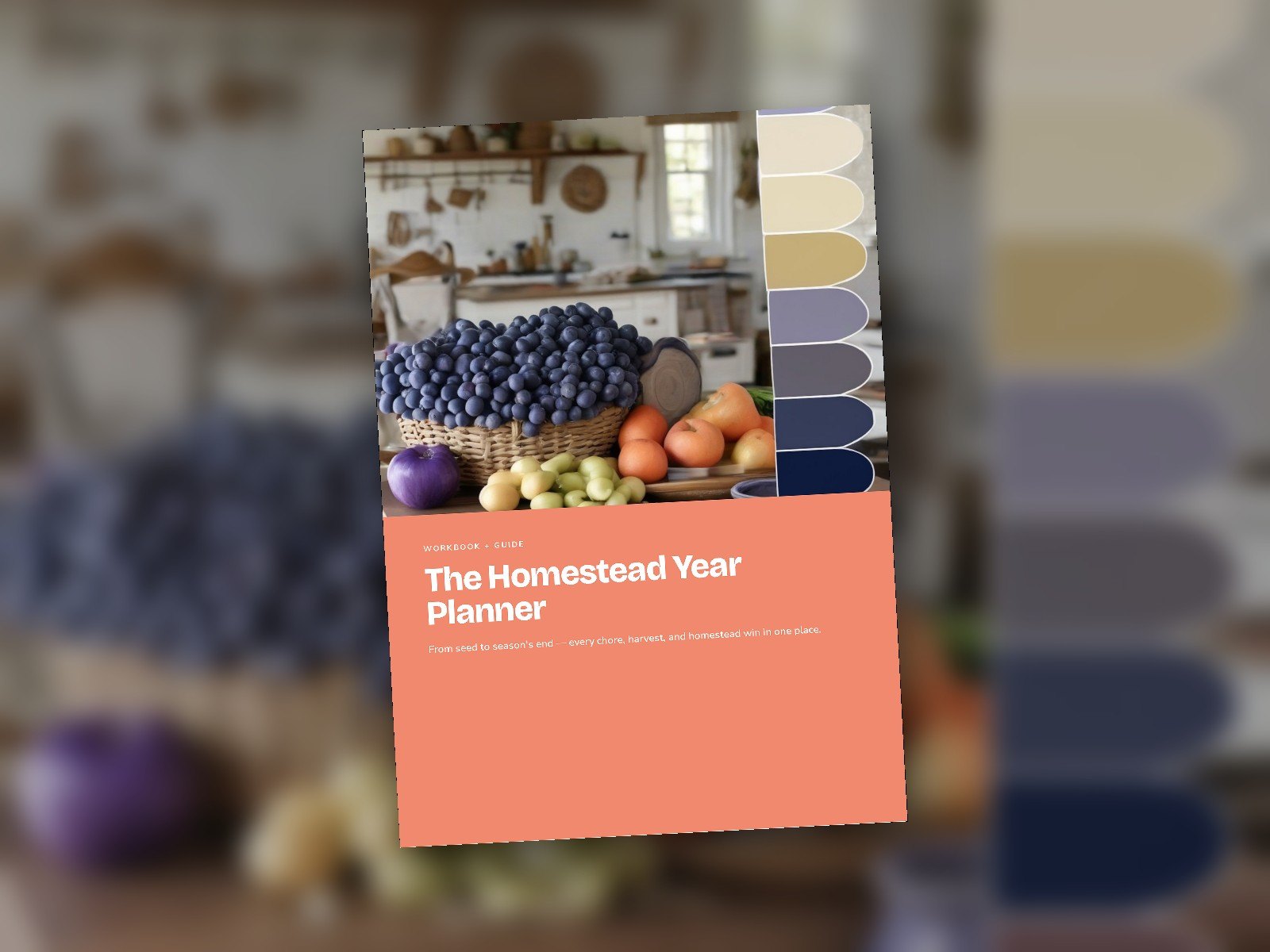
The Homestead Year Planner (https://www.aeternusvita.io/en/products/cat/books/spite-stack) is exactly the full-year system described above: garden bed maps and crop rotation, modular livestock logs, preserving and canning schedules, pantry inventory, a cottage-food-friendly income ledger, and an annual review — as a guide PDF plus a companion workbook with the twelve-month planning wheel. Practical organizational content with regulatory reminders throughout; always follow local rules for livestock, foraging, and cottage food sales.
Related shelves worth browsing: beekeepers can add a dedicated Beekeeping Planner for hive-level seasonal tracking, and if your homestead dream started as a search for more meaningful work, The Soul Purpose Prosperity Path helps connect that calling to an income plan.
Plan it in January. Thank yourself in August.
Related articles
2027-03-22 · 3 min read
How to Track Preserving, Pantry Stock, and Cottage-Food Income in One Binder
Harvest season generates three things: food, paperwork, and anxiety about the paperwork. Jars without labels, a freezer nobody inventoried, jam sold at…
Read article →2027-03-21 · 3 min read
Why a Garden Bed Map and Crop Rotation Plan Save Your Harvest
Ask a veteran gardener their highest-ROI habit and many will say the same unglamorous thing: writing down what grew where. Bed maps and rotation plans…
Read article →2027-04-21 · 4 min read
How to Set Fence Posts That Stay Straight for Years
Every leaning fence you have ever seen failed at the same place: the posts. Pickets can be replaced in an afternoon, but a post that shifts, rots, or…
Read article →